Story Innovation Lab
Story Innovation Lab
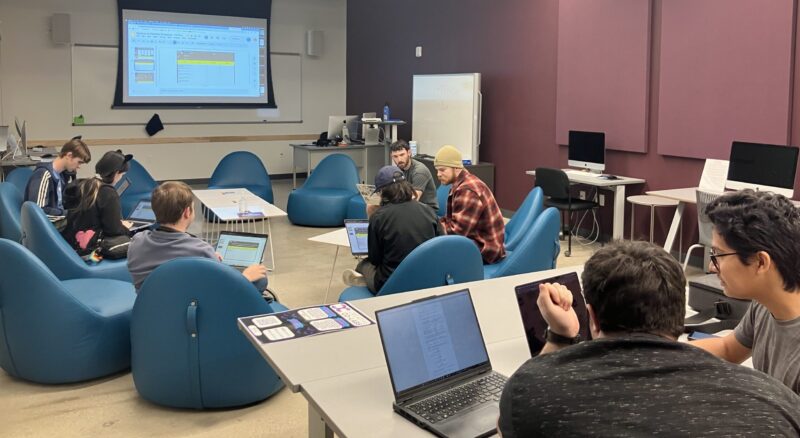
At the Highland Campus Creative Digital Media Center, the Story Innovation Lab is an interdisciplinary and transdisciplinary program collection of classes and projects exploring the possibilities of new and evolving forms of digital storytelling. Student-centered classes within this ecosystem have a particular innovation focus, whether it’s a general education or projects class, which can range from interactive filmmaking to industry leadership training (sometimes with collaborators, like on-site Austin PBS). With an eye towards the future, students regularly create media which speaks to community impact, ranging from profiles of resilience to regenerative climate stories.
Nested under the Creative Co-Labs program along with lab/project-based classes from ten Arts & Creative Industries Division Departments (ranging from Theatre to Game Design) to leverage the power of co-creative projects and wide-ranging perspectives, students strive to develop their voices, utilizing emerging technologies and applied storytelling approaches to prepare for the accelerating complexities of industry and the interdependent world we live in.
Example Class/Project Profiles:
The RTF Screenwriting for Features, Shorts & Documentaries class collaborated with the City of Austin and their biologists at the Balcones Wildland Preserve on the “Regenerative Digital Storytelling Circle” project. After taking part in on-site ecological restoration work as part of research, students developed “micro-documentaries” and wrote screenplays for animated short scripts shared with an advanced animation class via the Creative Co-Labs.
As part of our Video Workshop II class, students engaged with community artists to produce videos about the development of their various artistic works, projects ultimately put on display at each table as part of the Armadillo Bazaar over several weeks. The program also airs on our public media outlet ACC TV.
.
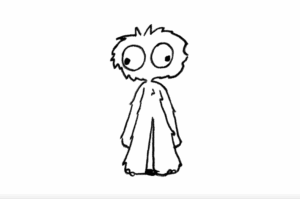
Through the Interactive Filmmaking class, students create “choose your own adventure” style projects, like Kippercool (the first Doodle), an exploration of the creative process itself.
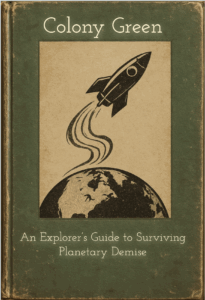
Through a specialized Introduction to Cinema class, students explore social issues, applying learned cinematic techniques to develop “Protopian” (instead of “dystopian” or “utopian”) stories through film pitch decks, imagining pathways from their perspectives towards better futures through the power of story.